
Views: 0 Author: Site Editor Publish Time: 2025-12-20 Origin: Site


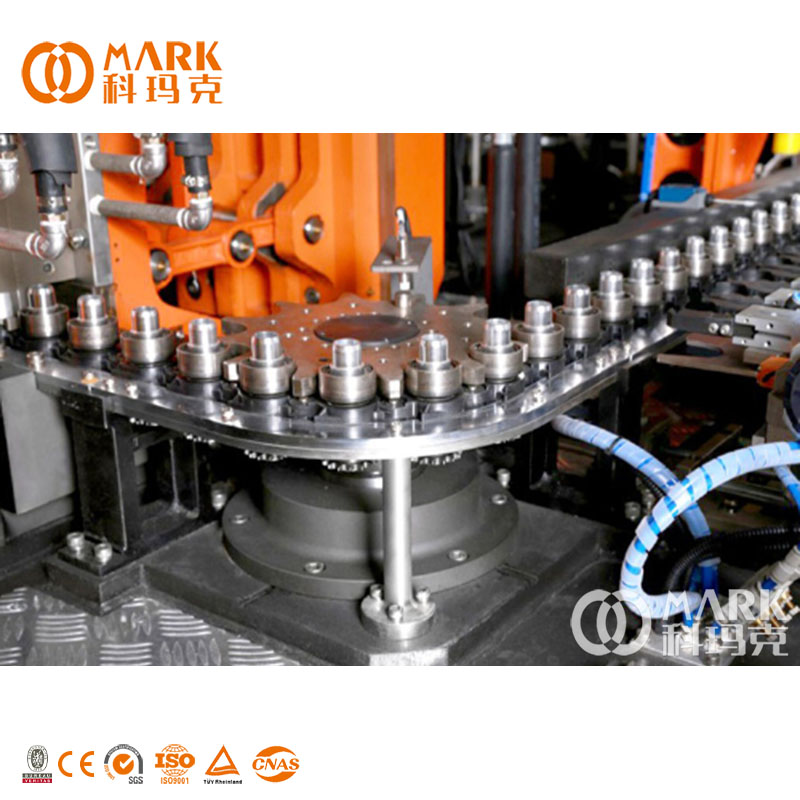
When browsing global marketplaces or manufacturer catalogs, you might see a machine listed for as low as $7,000. However, this sticker price is deceptive. It rarely reflects the final capital required to get a production line operational. For beverage manufacturers and packaging startups, understanding the true financial commitment involves looking far beyond the hardware on the floor. You must balance the initial Capital Expenditure (CapEx) against long-term Operational Expenditure (OpEx), such as electricity consumption, maintenance downtime, and scrap rates. A cheap unit that wastes 5% of your preforms or consumes excessive power will cost far more than a premium unit over a five-year lifecycle. This guide breaks down current market pricing tiers, the "hidden" auxiliary costs that can double your budget, and the technical specifications—like servo motors and air recovery systems—that justify the price differences. We aim to help you calculate the real cost of PET bottle blowing machine ownership so you can make a profitable investment.
Entry-Level Threshold: Semi-automatic units typically range from $7,000 to $20,000, suitable for small batches or complex jar shapes.
Production-Grade Threshold: Fully automatic linear machines start around $20,000 and can exceed $50,000 depending on cavitation and servo technology.
The "Iceberg" Costs: Auxiliary equipment (high-pressure compressors, chillers) often adds 40–60% to the base machine cost.
Energy Impact: Since blowing machines account for up to 70% of line energy consumption, paying more for air-recovery technology yields faster ROI.
To make a smart purchasing decision, you must first understand the three main tiers of investment available in the global market. The price of a bottle blowing machine is directly correlated with automation levels, output speed, and stability. While it is tempting to choose the lowest upfront cost, matching the machine tier to your production volume is critical for long-term survival.
The semi-automatic tier represents the entry point for the industry. These machines differ fundamentally from automatic lines because they require human intervention during the production cycle. An operator must manually heat the preforms in an oven and then transfer them by hand into the blow mold.
Target User: This tier is ideal for startups, laboratory testing, or manufacturers producing large containers (such as 5-gallon jugs) where speed is less critical than flexibility.
Production Reality: Since the process is labor-intensive, output consistency depends heavily on operator skill. If the operator moves too slowly, the preform cools down, leading to defects. Production speeds are generally low, often under 800 bottles per hour (BPH).
Cost Variance: The price within this tier fluctuates based on the bottle volume capacity. A machine designed for standard 500ml bottles is cheaper than one engineered to blow heavy 20-liter jars, which require larger clamping forces and bigger molds.
Moving into the fully automatic tier shifts the focus from labor to efficiency. Here, the machine handles the entire process—from preform feeding to bottle discharge—without human hands touching the plastic. This is the minimum standard for commercial beverage production.
Target User: Small to medium beverage plants needing between 2,000 and 6,000 BPH typically operate in this range. It is the sweet spot for regional water bottlers.
Tech Specs: Most machines in this price bracket rely on pneumatic systems (air cylinders) or hybrid designs to drive the clamping and stretching motions. While effective, they are louder and consume more energy than high-end electric alternatives.
Market Context: This segment is dominated by cost-effective manufacturing, particularly from Asian hubs. Manufacturers like King Machine and similar exporters offer robust linear machines that balance cost with reasonable reliability.
When production demands exceed 10,000 BPH or when the container specifications are extremely strict, the investment jumps significantly. This tier introduces advanced motion control technology.
Target User: High-volume production lines where downtime translates to massive revenue loss.
Value Prop: The primary cost driver here is the use of servo motors for clamping and stretching. Unlike pneumatic cylinders, servo motors provide precise speed and position control. This results in scrap rates below 0.2% and significantly quieter operation. Furthermore, these machines often include proprietary energy recovery systems that recycle high-pressure air, drastically lowering the electric bill over time.
Two machines may look identical on a specification sheet, both promising "4,000 bottles per hour." Yet, one costs $25,000 and the other $55,000. The difference lies in the engineering details that dictate longevity, energy efficiency, and bottle quality. Understanding these drivers prevents you from overpaying for features you don't need or underpaying for a machine that will fail under load.
The method used to move the mold and stretch rod is the biggest differentiator in machine cost.
Cheaper (Pneumatic): Traditional machines use compressed air cylinders to open and close molds. While initial costs are low, pneumatic systems are noisy and prone to wear. Seals degrade over time, leading to air leaks that drive up compressor energy usage. There is also a risk of oil contamination in the air supply affecting the final bottle. Premium pneumatic machines mitigate this by using high-standard components like FESTO cylinders, but the limitations remain.
Premium (Servo): Servo systems, often powered by Siemens or Mitsubishi motors, offer digital precision. They allow the machine to optimize the speed curve of the stretching rod, ensuring the plastic is distributed perfectly every time. This precision reduces scrap rates significantly and lowers maintenance costs since there are no air seals to replace.
The number of bottles a machine can blow simultaneously (cavities) directly impacts the price. A 2-cavity machine is cheaper than an 8-cavity machine, but the 8-cavity unit produces bottles at a much lower cost per unit due to economies of scale. However, the hidden value in modern machines is the "Smart" mold changeover system.
In older or cheaper designs, changing a mold to produce a different bottle shape can take technicians 4 to 6 hours. During this time, the line is stopped. Advanced PET bottle blowing machine models feature quick-lock structures that allow mold changes in approximately 20 minutes. For a co-packer producing multiple beverages, this flexibility is worth the premium price.
Uniform heating is the secret to a strong PET bottle. Basic machines use standard infrared lamps with simple voltage controls. While sufficient for round water bottles, they struggle with complex shapes (like square juice bottles) or recycled PET (rPET).
Advanced machines utilize layered heating zones with independent voltage control managed by a PLC. This allows the operator to create a precise "thermal profile" for the preform, heating specific areas more intensely than others. This capability is critical for rPET compatibility, ensuring the material stretches evenly without hazing or bursting, and ensures uniform wall thickness for high-quality packaging.
Many buyers exhaust their budget on the blowing machine only to realize they cannot run it. The machine is just the engine; it needs a fuel system and a cooling system to function. Competitors often omit these auxiliary costs from their initial quotes, leading to unpleasant budget surprises. A realistic budget must include the following peripheral equipment.
Standard factory air compressors typically operate at 7–10 bar (100–145 psi). This is enough to move pneumatic cylinders but completely insufficient for blowing a bottle. To expand a heated preform into a mold, you need 25–40 bar (360–580 psi) of pressure depending on the bottle design.
You must purchase a specialized high-pressure compressor system, which includes the compressor unit, a high-pressure air tank, and air dryers to remove moisture. Moisture is the enemy of PET; wet air creates cloudy bottles. For a standard 4-cavity machine, this high-pressure setup can cost nearly as much as a semi-automatic machine itself, often adding $8,000 to $15,000 to your CapEx.
Plastic retains heat. If you eject a bottle from the mold while it is still hot, it will deform and shrink, ruining the product. An industrial chiller is mandatory to circulate cold water through the mold and solidify the plastic instantly. Furthermore, for high-quality cosmetic or hot-fill bottles, a Mold Temperature Controller is required to keep the mold at a precise temperature, ensuring consistent clarity and crystallinity. Skipping this equipment results in high rejection rates.
The blowing machine is typically the largest energy consumer on a packaging line, often accounting for 70% of total electricity usage. This is where the difference between "cheap" and "efficient" becomes painful.
| Feature | Standard Machine | Machine with Air Recovery |
|---|---|---|
| Technology | Vents high-pressure exhaust to atmosphere | Recycles exhaust for low-pressure pneumatics |
| Energy Waste | High | Low (Reduces compressor load) |
| Potential Savings | 0% | 15% – 30% reduction in electric bill |
While a machine with an Air Recovery System costs more upfront, the reduction in ongoing electricity bills can pay for the difference within 12 to 18 months.
When facing a budget constraint, buyers often weigh two options: buying a brand-new machine from a reputable Chinese manufacturer or purchasing a used machine from a top-tier European brand like Sidel or Krones. Both paths have distinct advantages and risks.
European rotary machines are the gold standard for speed and durability. Models like the SBO or Contiform series are legendary for running 24/7 for decades. Buying used can give you access to this high-speed technology at a fraction of the new price.
However, the hidden risks are significant. Maintenance on these complex machines requires specialized knowledge. Spare parts are often proprietary and expensive. Furthermore, if the used machine was set up for a different bottle shape, "retrofitting" it with new molds and handling parts can cost tens of thousands of dollars.
Modern Chinese machines have closed the technology gap significantly. The primary advantage is the "Fresh Start"—you get zero operating hours, a valid warranty, and modern PLC interfaces that are easier to learn. Initial CapEx is lower, and spare parts are generally generic (standard pneumatic fittings and electrical components) rather than proprietary.
The trade-off is often in maximum speed. While European rotaries can hit 80,000 BPH, most linear Chinese machines top out around 12,000–15,000 BPH. Quality can vary, so it is vital to verify that the machine uses branded components like FESTO pneumatics and Siemens PLCs rather than unbranded generic parts.
Choose Used European if you need extreme high speed (>20,000 BPH) and have an experienced in-house maintenance team. Choose New Chinese if you want warranty security, lower initial investment, and flexibility for standard speeds (2,000–12,000 BPH).
The invoice for the machine is not the final bill. Getting the equipment from the factory floor to your production line involves logistical and service costs that must be budgeted.
Blowing machines are bulky. Even a compact fully automatic unit often requires a 20ft container, while a complete line with auxiliaries will need a 40ft or 40ft HQ container. Freight costs fluctuate wildly based on global fuel prices. Additionally, you must account for import duties and port handling fees, which can add 5–15% to the delivered cost.
Most manufacturers offer installation services, but they are rarely free. Standard terms require the buyer to cover the engineer's round-trip airfare, visa fees, and suitable accommodation. On top of this, there is usually a daily stipend, averaging $80–$100 per day per engineer.
The timeline varies by complexity. A semi-auto unit might take 3 days to commission, while a fully automatic line could take 10–25 days. This includes physical installation, utility connection, and the critical debugging phase to ensure the machine runs smoothly at full speed.
Do not underestimate the cost of learning. During the initial calibration and operator training phase, you will waste preforms. It is standard to budget for a "scrap allowance" of several thousand preforms to dial in the heating profile and blowing pressure. This is a sunk cost necessary to achieve long-term stability.
Before you send a Request for Quotation (RFQ) to a vendor, use this checklist to ensure you are asking for the right equipment. A vague request leads to inaccurate quotes.
Define the Preform: Be specific about your material. Are you using standard PET, or are you moving to rPET? rPET requires more sophisticated heating control. Are you blowing wide-mouth jars? This requires specific clamping modifications.
Output Buffer: Never buy a machine that meets your exact current demand. If you need 3,000 BPH, do not buy a 3,000 BPH machine. Buy for 120% of your need (e.g., 4,000 BPH). This buffer allows for maintenance downtime and slower running speeds for complex bottle shapes without creating a bottleneck in your filling line.
Compliance & Safety: If you are producing for food or beverage markets, the machine must meet safety standards. Check for CE certification (for Europe) or UL (for USA). Ensure the machine design supports HACCP compliance, such as using food-grade lubricants and easy-to-clean surfaces.
Vendor Due Diligence: Do not settle for a generic catalog video. Request a video of the specific model you are buying running your type of preform. This proves the vendor has actually built and tested the configuration you need.
The question "What is the cost of a PET bottle blowing machine?" does not have a single answer. It is a calculation involving CapEx (Machine + Auxiliaries) and OpEx (Energy + Scrap). While you can enter the market for as little as $7,000 with a semi-automatic unit, a production-grade automatic line will likely cost between $25,000 and $55,000 once necessary peripherals like high-pressure compressors and chillers are included.
For long-term profitability, we recommend prioritizing machines that offer high-pressure air recovery systems and guarantee low scrap rates (≤0.2%). The energy savings alone often justify the higher upfront sticker price. When soliciting bids, always request a "Total Solution Quote" that includes the compressor, chiller, and dryer. This approach ensures your budget reflects reality, not just the cost of the bare metal.
A: Semi-automatic machines typically cost between $7,000 and $20,000, making them affordable but labor-intensive. Fully automatic machines start around $20,000 and can exceed $50,000 for high-speed, servo-driven models. The extra cost for automation pays for itself through higher output consistency and reduced labor costs.
A: Yes, absolutely. Standard factory air (7–10 bar) is only enough for machine movement. Blowing the bottle requires 25–40 bar of pressure. You must budget for a dedicated high-pressure compressor system, which is a mandatory and significant expense.
A: A stable, high-quality machine should maintain a scrap rate of ≤0.2%. This benchmark ensures that you are not wasting valuable preforms during regular production. If a machine has a scrap rate higher than 1%, it will severely impact your profit margins over time.
A: Generally, no. Molds are custom-made based on your specific bottle design and the machine's cavity count. While some vendors might include one basic mold set as a promotion, additional or complex molds are quoted separately. Always clarify this in your contract.
A: Servo-driven machines, especially those equipped with air recovery systems and layered heating, can reduce energy consumption by 30–45% compared to older pneumatic models. They recycle high-pressure exhaust air to power low-pressure cylinders, drastically cutting the load on your compressor.