
Views: 0 Author: Site Editor Publish Time: 2025-12-27 Origin: Site


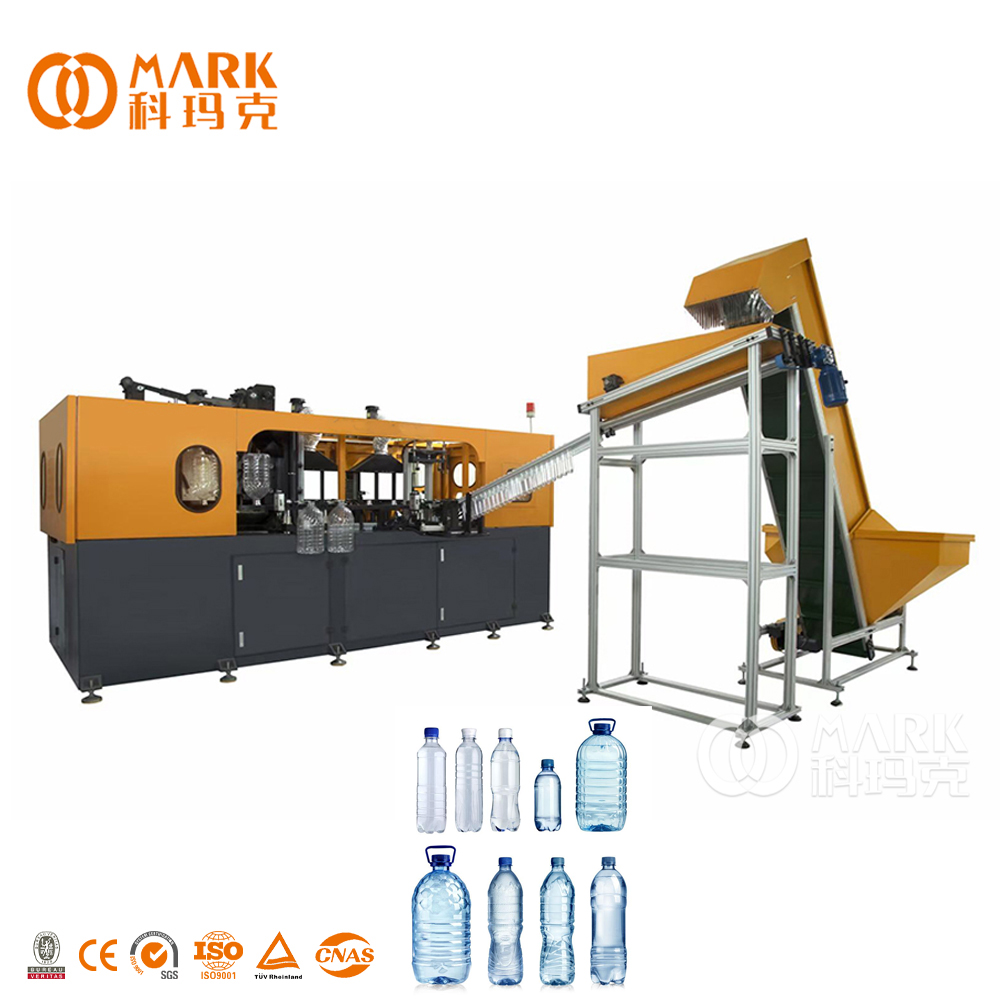
The global packaging industry relies heavily on Polyethylene Terephthalate (PET) due to its durability, clarity, and recyclability. However, creating a container that is both lightweight and strong enough to withstand carbonation or stacking pressure is a complex engineering feat. The dominant method for achieving this is Two-Stage Injection Stretch Blow Molding (ISBM). Understanding the blowing process of a pet bottle is not merely an academic exercise in mechanics; it is a business necessity. Optimizing this process directly impacts cycle times, minimizes material waste (scrap rate), and ensures the dimensional stability of the final product.
For manufacturers and production managers, the difference between a profitable line and a costly one often lies in the fine-tuning of thermal profiles and pressure settings. This guide breaks down the entire operation, from preform heating to final ejection. We will focus on the critical control parameters—temperature, pressure, and timing—that determine both the Return on Investment (ROI) and the quality of every container produced.
The "Two-Step" Distinction: Why separating preform injection from blowing (ISBM) offers higher output and better bottle strength compared to direct extrusion.
Thermal Precision: The narrow temperature window (90°C–110°C) required to optimize PET plasticity without crystallization.
Dual-Axis Strength: How simultaneous axial stretching (rod) and radial expansion (air) create the bottle's structural integrity.
Pressure Management: The critical difference between "pre-blow" (distribution) and "high-pressure blow" (definition).
Cost Drivers: How compressed air usage and cycle time define the Total Cost of Ownership (TCO).
The journey of a high-quality container begins long before the mold closes. It starts with the raw material: the PET preform. Often referred to as the "parison" in broader molding terms, the preform is a test-tube-shaped injection-molded part that already contains the final neck finish of the bottle. Before these preforms enter the bottle blowing machine, they must be inspected for physical defects. Even minor scratches or moisture contamination on a preform can result in catastrophic failure during the high-pressure blowing phase.
Once the preforms pass inspection, they are loaded onto spindles and enter the heating oven. This is arguably the most sensitive stage of the entire process. The preforms travel through a tunnel lined with infrared (IR) lamps while rotating continuously. This rotation ensures that the heat penetrates the plastic wall evenly, preventing hot spots that could cause the bottle to blow out unevenly.
Effective heating is rarely uniform from top to bottom. Manufacturers use a technique called "zonal heating." A preform typically requires different heat intensities at different heights. For example, the body of the bottle, which will undergo the most significant expansion, requires thorough heating to maximize elasticity. Conversely, the base area, which remains relatively thick to support the bottle, requires less heat. Operators adjust the voltage of individual IR lamps to create a specific thermal profile tailored to the bottle design.
A critical, often overlooked aspect of this stage is neck protection. The threaded neck (finish) of the preform must remain dimensionally stable so the cap fits perfectly after production. To achieve this, the machine actively shields the neck from IR radiation and often circulates cooling air or water around the neck area. If the neck gets too hot, it becomes oval during the blowing phase, rendering the bottle useless.
The goal of the heating oven is to bring the PET material to its Glass Transition Temperature. For PET, this "rubbery" state occurs within a narrow window of approximately 90°C to 110°C. Precision is non-negotiable here. If the preform is overheated (above 110°C), the material begins to crystallize, turning hazy or white—a defect known as pearlescence. If it is underheated (below 90°C), the plastic remains too stiff. This causes excessive stress on the material during stretching, leading to pearlescence from cold-stretching or even causing the preform to burst under pressure.
Once the preform reaches the correct temperature profile, it is rapidly transferred to the blow mold. Speed is essential; any delay results in heat loss, which alters the material's distribution properties. The mold clamps shut, and the core transformation begins. This stage utilizes a process called bi-axial orientation, which aligns the PET molecules in two directions to create exceptional strength.
The first axis of orientation is vertical. A mechanical stretch rod descends through the neck of the preform at a controlled speed. It pushes the bottom of the preform down toward the base of the mold. This action stretches the plastic longitudinally.
From a technical standpoint, this step is vital for "top-load" performance. By aligning the molecular chains vertically, the bottle gains the structural rigidity needed to support the weight of pallets stacked on top of it during transport. The stretch rod must be perfectly centered; a misalignment of even a millimeter can lead to a bottle with one side significantly thinner than the other.
While the rod stretches the preform vertically, compressed air expands it radially. In modern pet bottle blowing systems, this is strictly a two-phase operation to ensure material distribution control.
Phase A: Pre-Blow (Low Pressure): As the stretch rod descends, low-pressure air (typically 8–10 bar) is introduced. This expands the preform into a "bubble" shape. The goal is to stretch the material without letting it touch the cold mold walls yet. If the material touches the mold too early, it cools instantly and stops stretching, causing thick spots.
Phase B: High-Pressure Blow: Once the stretch rod reaches the bottom of the mold, the machine switches to high-pressure air (typically 25–40 bar). This massive surge of pressure forces the plastic firmly against the detailed cavity of the mold.
The high-pressure phase is responsible for "definition." It ensures that intricate details—such as brand logos, strengthening ribs, and grip lines—are sharply formed. It also finalizes the bottle’s diameter, locking in the intended volume.
The combination of the mechanical rod (axial) and pneumatic pressure (radial) is what gives the PET bottle its unique properties. An unoriented PET container would be brittle and weak. However, the bi-axial stretching forms a lattice-like molecular structure. This structure significantly improves the barrier properties against gas (keeping soda fizzy) and increases impact resistance, allowing the bottle to survive drops without shattering.
After the bottle is fully formed against the mold walls, the process enters a stabilization phase. The high pressure is not vented immediately; it is held briefly. This "holding pressure" ensures the plastic remains in contact with the chilled mold metal, allowing heat to transfer out of the plastic rapidly.
Thermal management of the mold is just as important as heating the preform. Standard beverage bottles use "cold molds," where chilled water (typically 5–8°C) circulates through channels inside the mold block. This facilitates rapid cooling, allowing the plastic to "freeze" into its final shape in milliseconds. The faster the cooling, the shorter the cycle time, and the higher the production output.
There is a notable exception for "Hot Fill" bottles, used for juices or teas that are bottled hot to ensure sterility. These require a "Heat Set" process where the mold is actually heated (often above 100°C) to induce thermal crystallization. This prevents the bottle from shrinking when hot liquid is poured into it later. However, for standard water and carbonated soft drinks, the goal is always maximum cooling speed.
Once the plastic is rigid enough to hold its shape, the high-pressure air inside the bottle is exhausted through a silencer. This depressurization must happen almost instantly to prevent the bottle from deforming when the mold opens. The mold halves separate, and the finished pet bottle is ejected, either by a robotic arm or a simple drop-chute mechanism. The entire sequence—from the moment the mold closes to ejection—often takes less than two seconds per cavity on high-speed rotary machines.
Achieving a consistent bottle requires constant vigilance. Operators often use the "stop-at-pre-blow" method to verify the process. By turning off the high-pressure blow, they can examine the intermediate "bubble" shape. A correct pre-blow should look like a spindle or a football—evenly stretched. If it looks like a bell (wide bottom, narrow top) or a pear, the heating or timing parameters are incorrect.
Below is a summary of common defects and their root causes:
| Defect Symptom | Likely Root Cause | Corrective Action |
|---|---|---|
| Pearlescence (Haze/Whitening) | Overheating of the preform. | Reduce overall lamp voltage or increase ventilation in the oven. |
| Off-Center Gates | Misalignment of the stretch rod or delayed pre-blow pressure. | Calibrate the stretch rod or adjust pre-blow timing to start earlier. |
| Thin Corners / Webbing | Uneven material distribution. | Adjust the zonal heating profile (usually the specific zone affecting the corner). |
| Stress Cracking | Improper stretch ratios (Over-stretching). | Check preform design. Target Radial stretch <4.2x and Axial stretch <3.1x. |
| Bottom Burst | Material too cold or base too thin. | Increase heat at the preform base or reduce pre-blow pressure. |
The cost of defects extends beyond the wasted plastic. A high scrap rate reduces effective machine capacity and increases energy consumption per sold unit. Furthermore, a bottle that passes visual inspection but fails stress testing can result in leaks during logistics, damaging pallets of goods and harming brand reputation.
Selecting the right equipment is critical for long-term profitability. When evaluating machinery, buyers often weigh capacity against footprint. Rotary machines offer immense speed and output suitable for major beverage brands, while linear machines provide flexibility and lower capital costs for smaller operations or niche products.
Energy is the largest operational expense in blowing bottles. The heating oven is a major consumer, but the pneumatic system is often the hidden cost driver. Compressing air to 30 or 40 bar requires significant electricity. Efficient machines incorporate air recovery systems that recycle the high-pressure exhaust air to be used for the low-pressure pre-blow or for pneumatic machine movements, reducing total energy usage by up to 30%.
For contract packers running multiple SKUs, changeover flexibility is vital. Modern machines allow for tool-less mold changes, reducing downtime from hours to minutes. Additionally, the industry is shifting from hydraulic systems to all-electric servo motors. Servo systems offer cleaner operation (no oil leaks), higher precision in stretch rod movement, and significantly reduced maintenance requirements compared to hydraulic alternatives.
The production of a PET bottle is a delicate balance of heat, speed, and pressure. It transforms a small, thick tube of plastic into a robust container capable of withstanding significant internal and external forces. While the concept of inflating plastic seems simple, the reality involves precise control over material science and thermodynamics.
Successful production is not just about making a shape; it is about achieving lightweight strength and dimensional accuracy at high speeds. As sustainability becomes a greater priority, the ability to blow lighter bottles with lower energy consumption will define the leaders in the market. Manufacturers must view their equipment choices holistically—reviewing machine specifications, air compressor efficiency, and chiller capacity is just as important as understanding the blowing process itself.
A: The ideal processing temperature for PET blowing falls between 90°C and 110°C. This range is known as the glass transition window. If the temperature drops below 90°C, the plastic becomes too brittle and may burst or stretch unevenly. If it exceeds 110°C, the PET begins to crystallize, causing the bottle to turn white (hazy) and losing its transparency and strength.
A: Pre-blow is the initial phase using low pressure (8–10 bar) to gently expand the preform and distribute the material without touching the mold walls. High-pressure blow (25–40 bar) follows immediately after; its function is to force the plastic tightly against the mold cavity to define the final shape, including logos, ribs, and the exact diameter.
A: The stretch rod provides axial (vertical) orientation. It mechanically pushes the preform to the bottom of the mold, aligning the molecular chains longitudinally. Without the stretch rod, the bottle would likely have a very thick, heavy bottom and thin sidewalls, resulting in poor top-load strength and an inability to stack pallets.
A: A standard bottle blowing machine typically requires a high-pressure air supply ranging from 25 to 40 bar, depending on the complexity of the bottle design and the thickness of the material. A stable airflow is crucial; pressure fluctuations can lead to incompletely formed bottles or undefined details.