
Views: 0 Author: Site Editor Publish Time: 2025-12-25 Origin: Site


Walk into any convenience store, and you will see bottled water selling for $1.29 to $2.50. Yet, industry insiders know the industrial reality is vastly different. The container itself often costs mere pennies to manufacture. This massive discrepancy creates a "sticker shock gap" that confuses consumers and challenges new beverage entrepreneurs. Understanding the true numbers requires defining your position in the supply chain. Are you a brand owner buying empty bottles and paying for the logistics of shipping air? Or are you a manufacturer making them, where your primary costs are resin and electricity?
This "Make vs. Buy" dilemma is the core conflict for scaling beverage companies. For low-volume producers, outsourcing is necessary. However, for high-volume producers, the cost isn't just the plastic; it is the massive inefficiency of transporting empty containers. This analysis breaks down the raw unit economics of PET production, the dominance of raw material prices, and the tipping point where investing in your own production equipment transforms your bottom line. We will explore how the cost to make a plastic bottle changes dramatically once you control the manufacturing process.
The Baseline Number: The marginal manufacturing cost of a standard 500ml PET bottle is typically between $0.02 and $0.05 (excluding cap and label), driven largely by resin prices.
The Logistics Premium: Purchasing pre-blown empty bottles can triple your unit cost ($0.10–$0.15+) due to shipping inefficiencies (shipping "air" vs. dense preforms).
Material Dominance: Raw PET resin accounts for roughly 60–70% of the final bottle cost, making lightweighting the most effective cost-reduction strategy.
The ROI Threshold: In-house production via a bottle blowing machine shifts the cost structure from high OpEx (shipping/markups) to upfront CapEx, typically offering ROI in 12–24 months for volumes exceeding 50,000 units/month.
When you strip away marketing, retail markups, and logistics, the fundamental cost of a plastic bottle is surprisingly low. However, this low cost is volatile. It depends heavily on global commodity markets. To understand the true manufacturing cost, you must look at the primary input: Polyethylene Terephthalate (PET) resin.
In almost every scenario, the price of PET resin dictates the final unit cost. Industry data suggests that raw material accounts for approximately 60% to 70% of the manufacturer's expense. PET is a petroleum-derived product, meaning its price fluctuates with the global oil and natural gas markets. Historically, PET resin prices hover between $0.70 and $1.20 per pound.
You can calculate the material cost with simple math. If a standard 500ml water bottle weighs 20 grams, and resin trades at roughly $0.80 per pound (approx. $1.76 per kg), the calculation looks like this:
| Component | Weight / Unit | Market Price (Est.) | Material Cost Per Bottle |
|---|---|---|---|
| PET Resin | 20 grams | $1.76 / kg | $0.035 |
| Lightweight Resin | 12 grams | $1.76 / kg | $0.021 |
This math reveals why lightweighting is critical. Shaving just a few grams off the design directly impacts the bottom line.
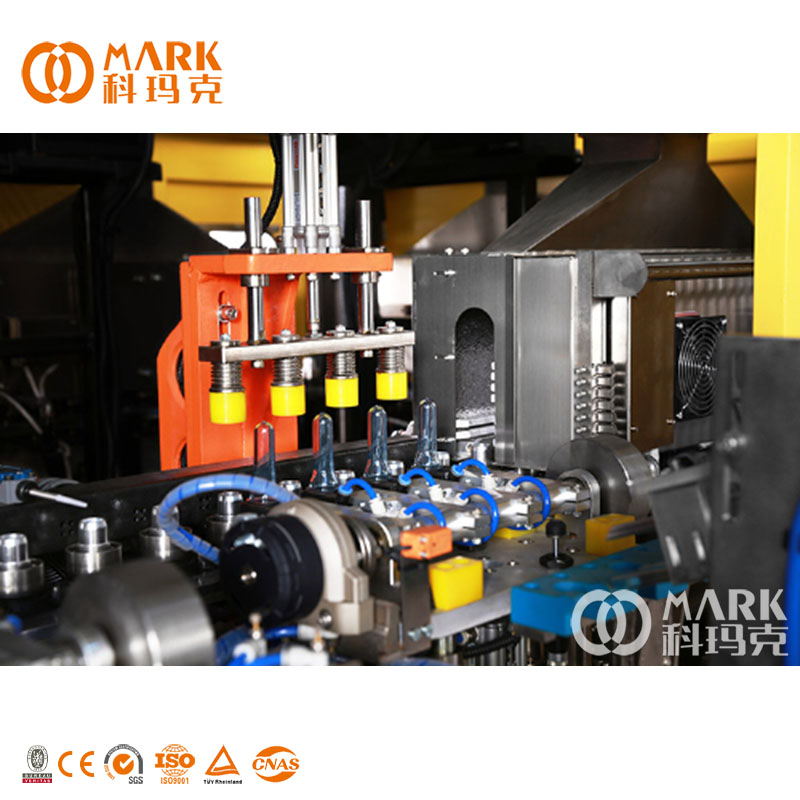
Once you have the material, you need energy to transform it. The process involves heating a preform (a test-tube-shaped piece of plastic) until it is malleable, then using high-pressure air to blow it into a mold. This consumes electricity in two ways:
Heating: Infrared lamps heat the preforms to roughly 100°C.
Compressing: High-pressure air compressors (30–40 bar) expand the plastic.
In efficient, fully automated setups, energy adds roughly $0.005 to $0.01 per unit. Labor costs vary by region and automation level. A fully automated line requires supervision rather than manual handling, amortizing labor costs down to fractions of a penny per bottle.
Newcomers often misunderstand the difference between fixed and marginal costs. In manufacturing, the "first bottle" is incredibly expensive. You might spend $200,000 on a machine, $15,000 on a mold, and $50,000 on installation. That first bottle technically costs $265,000. However, once the line is running, the millionth bottle costs only $0.03. This paradox highlights why volume is the only way to justify in-house production. If you only need 10,000 bottles a year, the fixed costs will destroy your margins.
If the material cost is only three cents, why do suppliers charge ten to twenty cents for an empty bottle? The answer lies in physics, not economics. When you buy pre-made empty bottles, you are paying a "logistics premium" that often exceeds the cost of the plastic itself.
Shipping empty bottles is essentially shipping trapped air. A standard 53-foot semi-truck can carry roughly 200,000 to 300,000 preforms because they are small, dense, and nestable. In contrast, that same truck can only carry about 20,000 to 30,000 inflated, empty 500ml bottles.
This 1:10 ratio destroys efficiency. If you outsource your bottles, you are paying for ten times as many trucks, ten times the fuel, and ten times the driver wages compared to a competitor who blows their own bottles on-site. This is the primary driver for investing in a bottle blowing machine.
Beyond shipping, outsourcing introduces vendor markups. The supplier must cover their own energy, labor, rent, and profit margin. Consequently, the market rate for a generic 500ml clear bottle often lands between $0.10 and $0.22, depending on order volume.
There is also the risk of damage. Empty PET bottles are fragile. They dent, scratch, and crush easily during transit. A 5% scrap rate on incoming shipments is not uncommon, further raising your effective cost per unit. Furthermore, storing empty bottles requires massive warehousing space. A pallet of preforms takes up one square meter; the equivalent number of blown bottles might fill a small room.
Deciding to bring production in-house is a financial calculation, not just an operational one. You must determine the "Breakeven Point" where the savings from self-manufacturing cover the capital expenditure (CapEx) of the equipment.
The formula for ROI is straightforward. You calculate the difference between what you pay a vendor and what it would cost to make it yourself.
Savings per Bottle = (Outsourced Price) - (Resin + Energy + Labor)
If you currently pay $0.15 per bottle, and your in-house cost would be $0.04, you save $0.11 per unit. If you produce 100,000 bottles a month, that is $11,000 in monthly savings. If a semi-automatic machine setup costs $50,000, your ROI period is under five months. For larger operations, the numbers scale rapidly.
The type of equipment you choose dictates your entry cost and production speed.
Semi-Automatic Machines: These require an operator to manually move heated preforms into the mold. Entry costs are lower ($15,000–$40,000), making them ideal for startups or niche products. However, they have higher labor costs and inconsistent cycle times.
Fully Automatic Machines: These systems automatically load, heat, blow, and eject bottles. Entry costs range from $80,000 to over $200,000. They offer the lowest unit cost, consistent quality, and high output, which is essential for brands scaling up distribution.
Production speed is measured in Bottles Per Hour (BPH). Higher speeds amortize the machine cost faster but require higher upfront investment. A 4-cavity machine running at 4,000 BPH offers significant efficiency gains over a 2-cavity machine running at 1,500 BPH, reducing the energy cost per bottle by maximizing the throughput of the heating oven.
Not every PET bottle costs the same to produce. Several technical variables can swing your unit economics by 20% to 50%.
Since resin is 70% of the cost, reducing weight is the fastest way to save money. This is a strategic advantage of in-house production. An outsourced bottle must be thick enough (e.g., 12–15 grams) to survive the rigors of shipping empty.
If you blow the bottle right before filling it, you can "lightweight" the design significantly—perhaps down to 9 or 10 grams. Since the bottle is filled immediately, the internal pressure of the water provides structural integrity. You effectively eliminate 20% of your raw material cost just by removing the need to ship empty air.
The shape of your bottle impacts cost. Standard cylindrical molds are cheap to make and easy to run. Custom ergonomic designs with complex curves or deep grips require expensive molds ($3,000–$20,000 each) and may require higher blowing pressure. High-pressure air is energy-intensive; blowing a complex design at 40 bar costs more in electricity than blowing a simple round bottle at 30 bar.
You generally have two options for raw materials: buying PET resin pellets (if you also own an injection molding machine) or buying ready-made preforms. Most bottlers start by buying preforms. Buying preforms in bulk is the middle ground. You avoid the massive CapEx of injection molding equipment but still gain the logistics savings of blowing the bottles yourself. The relationship with your preform supplier is critical; securing a contract locked to resin indices protects you from spot market volatility.
The sticker price of the machine is not the final cost. To calculate the true cost to make a plastic bottle, you must account for the peripheral ecosystem required to keep the line running.
A blowing machine cannot operate in a vacuum. It requires a high-pressure air compressor, which is often the single largest energy consumer in the plant. You also need air dryers to remove moisture (which ruins PET) and water chillers to cool the molds rapidly. Often, the cost of these ancillaries can equal 50% to 100% of the cost of the blowing machine itself. Ignoring these in your budget leads to severe financial strain during implementation.
Modern blowing machines are complex. They involve pneumatics, hydraulics, and high-voltage heating elements. High-pressure seals wear out and need regular replacement. Infrared lamps burn out. If you do not have a skilled technician on staff, you will face downtime. In a high-volume production environment, an hour of downtime can cost thousands of dollars in lost revenue. Factoring in the salary of a trained operator or a maintenance contract is essential for an accurate TCO calculation.
When you buy bottles, the vendor handles QC. When you make them, you own the waste. Burst bottles, uneven wall thickness, or hazy plastic (due to improper heating) are your responsibility. For food and pharmaceutical applications, you may need automated vision inspection systems to reject defects before they reach the filler. A scrap rate of 1-2% is normal during startup, and this waste represents a real cost that must be factored into your per-unit pricing.
So, how much does it really cost to make a plastic bottle? The answer depends on your scale. For small operations producing fewer than 20,000 units a month, the "cost" of self-manufacturing is prohibitively high due to equipment CapEx and technical complexity; in this range, paying $0.15 for an outsourced bottle is a rational business decision.
However, for scaling brands, the pivot to in-house production changes the game. Once you integrate a bottle blowing machine, the unit cost drops precipitously—often landing between $0.03 and $0.05. This margin expansion comes primarily from eliminating the "air tax" of logistics. The best next step is to perform a strict "Cost Per Thousand" (CPM) analysis. Compare your current monthly spend on empty bottles against the estimated resin and energy costs of in-house production. If the savings cover the equipment lease in under two years, it is time to stop shipping air and start blowing your own bottles.
A: Raw material, specifically PET resin, is the single largest cost factor, typically accounting for 60% to 70% of the final bottle's production cost. Because of this high percentage, fluctuations in global oil and petroleum markets directly impact the manufacturing cost per unit. This is also why reducing the bottle's weight (lightweighting) is the most effective method for lowering overall expenses.
A: It is significantly cheaper to buy preforms. The primary reason is logistics. You can fit approximately 10 times as many preforms on a truck compared to fully blown empty bottles. When you buy ready-made bottles, you are paying a premium to ship "air." By purchasing preforms and blowing them on-site, you eliminate most of this shipping inefficiency and reduce storage requirements.
A: The price varies widely based on automation and speed. A semi-automatic machine suitable for low volumes can range from $15,000 to $40,000. In contrast, fully automatic high-speed rotary machines used for mass production generally start around $80,000 and can exceed $200,000. The investment depends on your required Bottles Per Hour (BPH) and the level of labor reduction you desire.
A: Yes, and this is a major benefit of owning a bottle blowing machine. If you buy empty bottles, they must be thick enough to withstand shipping without crushing. If you manufacture in-house, you can design ultra-lightweight bottles that are filled immediately, using the liquid's internal pressure for strength. This can reduce resin usage by 20-30%, directly lowering your unit costs.