
Views: 0 Author: Site Editor Publish Time: 2025-12-24 Origin: Site


Choosing the wrong equipment for your production floor often leads to significant product waste, inconsistent fill levels, and persistent maintenance bottlenecks. Liquid filling is not merely a mechanical step in packaging; it is the critical intersection where fluid viscosity, container geometry, and production speed must align perfectly. A mismatch here forces operators to constantly adjust settings or accept higher rejection rates, draining profitability over time.
Operators and plant managers must evaluate filling technologies based on operational realities rather than just upfront cost. Operational success depends on understanding how different physical principles—such as gravity, displacement, or pressure—interact with your specific product. This article moves beyond basic definitions to compare the industry's standard methods, including Gravity, Piston, Overflow, Pump, and Vacuum systems. We analyze their accuracy trade-offs, scalability, and suitability for your specific manufacturing environment.
Viscosity Dictates Method: Thin liquids (water) favor Gravity/Overflow; thick products (sauces/pastes) demand Piston or Pump displacement.
Volume vs. Level: Choose Volumetric Filling (Piston) for regulatory accuracy (±0.25%), or Fill-to-Level (Overflow) for shelf appeal in transparent bottles.
Automation Tiers: Scalability ranges from benchtop semi-automatic units to integrated monobloc systems, depending on CPM (Containers Per Minute) goals.
Hidden Costs: Consider clean-in-place (CIP) complexity and product shear sensitivity, not just the upfront machine cost.
Manufacturers should group liquid filling technologies by their operational principle rather than just price or speed. This approach helps you quickly eliminate options that physically cannot handle your product's characteristics.
Volumetric systems measure the product by volume rather than weight or level. They ensure that every customer receives the exact amount stated on the label, regardless of minor variations in the container's interior volume.
Mechanism: This method uses a precision-machined cylinder and piston assembly. The piston retracts to draw product from the hopper into the cylinder, then extends to force that specific volume into the container through a nozzle. Check valves control the flow direction.
Best Use Case: Piston fillers excel with high-viscosity products. If your production involves thick pastes, chunky salsas, or cosmetic creams, piston filling provides the necessary force to move the product. It is often the only viable option for liquids containing particulates.
Accuracy: These systems offer high precision, typically ±0.5% or better. Because the cylinder volume is fixed mechanically, the accuracy remains consistent even if the bottle shape varies slightly.
Trade-off: The mechanical complexity poses cleaning challenges. You often need tool-free disassembly designs to clean the piston and cylinder thoroughly. Additionally, the physical force of the piston can cause "shear" damage to shear-sensitive liquids like certain emulsions or proteins.
Mechanism: Pump fillers displace liquid based on the rotation of a gear, lobe, or rotor. Modern systems use servo motors to count the exact number of rotations or pulses required to dispense a target volume.
Best Use Case: Peristaltic pumps are ideal for high-value pharmaceuticals because the fluid only touches the tubing, ensuring zero cross-contamination. Gear pumps are better suited for larger volume fills where speed is a priority.
Advantage: Versatility is the primary benefit. Changing the fill volume is a simple digital setting on the HMI (Human Machine Interface), whereas piston fillers often require mechanical adjustments. This makes pump fillers excellent for facilities running many different SKUs.
Level-based fillers prioritize the appearance of the product on the shelf. They fill every bottle to the exact same height, even if the internal volume of the bottles varies slightly due to manufacturing tolerances.
Mechanism: Specialized nozzles dive into the bottle and create a seal. Product flows in until it reaches a specific level controlled by the nozzle's air vent. Any excess liquid recirculates back to the main tank.
Best Use Case: This method is the standard for cosmetic, spirit, and household cleaner brands using transparent containers. When consumers see bottles lined up on a shelf, they expect the fill lines to be perfectly identical. Overflow filling guarantees this aesthetic uniformity.
Limitation: It is generally not suitable for high-viscosity fluids that struggle to recirculate through return hoses. It is also risky for foaming products, as the recirculation process can agitate the liquid, creating excessive foam.
Mechanism: This system uses time-based flow driven purely by gravity. A supply tank sits above the nozzles, and valves open for a set duration to allow liquid to flow into the container.
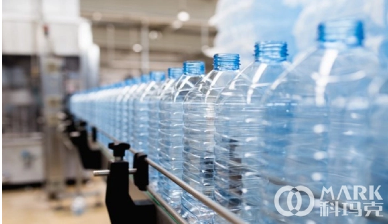
Best Use Case: Gravity filling is the "workhorse" technology for thin, free-flowing liquids. It is the most common method found in a standard Water filling line or for handling chemical solvents that are as thin as water.
Advantage: These machines have the lowest maintenance requirements because they have few moving parts. They are cost-effective and reliable for dedicated lines running consistent, low-viscosity products.
Certain products require manipulation of the atmospheric pressure within the bottle to fill successfully, either to retain carbonation or to manage delicate fluids.
Mechanism: The machine pressurizes the bottle with CO2 to match the pressure inside the bulk tank before the liquid valve opens. This equilibrium allows the carbonated liquid to flow into the bottle by gravity without foaming over.
Best Use Case: This is the mandatory technology for any Beverage filling machine handling beer, soda, sparkling wine, or carbonated water. Without counter-pressure, the carbonation would escape immediately upon filling.
Critical Factor: Managing Total Packaged Oxygen (TPO) is crucial here. Quality systems include double pre-evacuation steps to remove air from the bottle before filling to prevent oxidation of the beverage.
Mechanism: The system creates a pressure differential that draws the liquid into the container. It requires a seal on the bottle finish to pull the vacuum.
Best Use Case: This method excels with narrow-neck glass bottles, such as those used for wine or olive oil. The vacuum helps prevent dripping and can compensate for minor defects in the bottle's glass. It generally does not work well with flexible plastic bottles, as the vacuum pressure can collapse the container walls.
Once you select a filling principle, you must determine the level of automation required to meet your throughput goals.
Scenario: These units serve lab-scale operations, startups, or co-packers running small batches of many different products. An operator manually places the bottle under the nozzle and triggers the fill cycle.
Pros/Cons: The capital expenditure (CapEx) is low, making entry easy. However, labor intensity is high, and fill accuracy often relies on the operator's consistency and fatigue levels.
Scenario: Inline systems represent the industrial standard for SME growth. Bottles move down a conveyor, and a bank of nozzles dives to fill them simultaneously (e.g., 4, 8, or 12 bottles at a time).
Scalability: These systems are highly modular. You can often expand an existing filling line by adding more nozzles to the manifold or upgrading the pump capacity. This allows the machine to grow with your production demands without requiring a complete replacement.
Scenario: High-speed mass production facilities, such as those producing bottled water or major beverage brands, rely on rotary monoblocs.
Efficiency: These systems integrate rinsing, filling, and capping into a single, compact footprint. A rotary monobloc offers the highest Containers Per Minute (CPM) throughput. However, changeovers for different bottle sizes are complex and time-consuming, making them less suitable for short runs.
Selecting the right technology involves cross-referencing your product specifications with machine capabilities. Use the following matrix to guide your decision.
| Criterion | Key Considerations | Recommended Method |
|---|---|---|
| Viscosity | Is it water-thin or paste-like? Does it contain chunks? | Thin: Gravity/Overflow Thick/Chunks: Piston |
| Container | Glass (rigid) vs. PET (flexible). Wide mouth vs. narrow neck. | Glass: Vacuum/Any Plastic: Gravity/Piston (Avoid Vacuum) |
| Accuracy Goal | Regulatory net weight vs. Visual shelf appeal. | Strict Volume: Piston/Mag Meter Visual: Overflow |
| Product Type | Carbonated vs. Still. Foaming vs. Non-foaming. | Carbonated: Isobaric Foaming: Bottom-up Piston |
Review the "flowability" of your product. Does the viscosity change drastically with temperature, like coconut oil? If your product contains particulates—such as seeds in jam or chunks in salsa—a Piston filler with a rotary valve is mandatory. For products that foam easily, like liquid soaps, you need a system capable of "bottom-up" filling to submerge the nozzle and minimize agitation.
The physical strength of your container matters. Vacuum fillers can shatter thin-walled plastic bottles due to negative pressure. Gravity fillers are generally safe for all container types. Regarding geometry, odd-shaped bottles often make volumetric filling safer than level filling if you need to comply with strict net-weight regulations.
Your decision framework should depend on how you sell the product. If you sell by strict weight or volume (Regulatory strictness), Piston fillers or Magnetic Flow Meters offer the necessary compliance. If you sell by visual impact in a clear container (Consumer perception), Overflow filling ensures that every bottle looks identical on the shelf, boosting consumer trust.
Evaluate the "wetted path"—the parts of the machine that touch your product. How long does it take to strip and clean these components? For dairy or pharmaceutical applications, you must meet 3A sanitary standards. This requirement often rules out complex gear pumps in favor of systems with true Clean-In-Place (CIP) capabilities.
The total cost of ownership (TCO) extends far beyond the initial purchase price. Factors like waste, downtime, and parts replacement significantly impact ROI.
Analyze the "drip" and "recirculation" loss inherent in different methods. While Overflow fillers offer superior visual consistency, they "stress" the product by repeatedly recycling it through the system. This can alter the texture of sensitive creams or reduce the alcohol content in spirits due to evaporation.
Calculate the cost of switching SKUs. A machine that takes four hours to clean and recalibrate destroys profitability for co-packers running five different products a day. Modern solutions use servo-driven fillers to reduce mechanical adjustments. These systems store recipes digitally, allowing operators to switch fill volumes and speeds with a single button press.
Piston seals eventually wear out, and pump tubes degrade over time. When budgeting, estimate the annual cost of consumables like O-rings, gaskets, and tubing. Ensure that your supplier has a robust inventory of spare parts to prevent extended downtime.
There is no "perfect" filler that suits every application. The right choice is always a match between the product's physics—viscosity, foaming, and particulates—and the business's scale. Established manufacturers may prioritize the sheer speed and efficiency of a rotary monobloc, while growing brands should prioritize the versatility of inline or servo-pump systems that handle multiple SKUs.
Before committing to a significant capital expenditure, we strongly recommend scheduling a viscosity test or an engineering consultation. Validating your product on the actual equipment is the only way to guarantee performance.
A: Piston filling and servo-driven pump filling are generally the most accurate volumetric methods. They typically achieve precision rates of ±0.25% to ±0.5%. This high level of accuracy makes them ideal for products where regulatory compliance regarding net weight is critical, or for high-value products where overfilling represents a significant financial loss.
A: For foaming liquids, "Bottom-up" filling is the best approach. This technique involves the nozzle diving to the bottom of the container and rising slowly as the liquid fills. This keeps the nozzle tip submerged, minimizing turbulence and agitation that causes foam. Piston fillers and Flow Meter fillers often utilize this feature effectively.
A: While some "hybrid" machines exist, they often come with compromises. Generally, a machine optimized for water (like a gravity filler) cannot move thick creams. Conversely, a heavy-duty piston filler can fill water, but it may be overkill and slower than necessary. Specialized equipment usually delivers better efficiency and reliability than trying to force one machine to do everything.
A: The primary difference lies in the measurement principle. Gravity filling is time-based and volume-oriented; it fills for a set time. Overflow filling is level-based; it fills to a specific visual height regardless of the bottle's internal volume. Overflow is preferred for clear bottles where visual consistency is key, while gravity is a simple, low-maintenance option for bulk fluids.
A: Viscosity directly impacts flow rate. Higher viscosity (thicker liquid) creates more resistance, requiring more force or time to push the product through the nozzle. To maintain speed with viscous products, manufacturers must use larger nozzle diameters, higher pressure (pumps/pistons), or heat the product to lower its viscosity temporarily during the filling process.