
Views: 0 Author: Site Editor Publish Time: 2025-12-23 Origin: Site


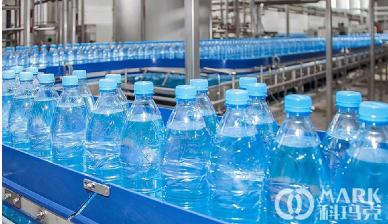
Liquid filling appears simple on the surface. You move fluid from a bulk tank into a container. However, in an industrial setting, this action requires a complex balance of speed, volumetric precision, and strict hygiene compliance. Manufacturers cannot afford inconsistency. A variance of a few milliliters can lead to regulatory fines or massive product giveaway over a production year.
We must define the scope accurately. The process of liquid filling is not merely a single machine action. It acts as an integrated workflow involving container handling, product conditioning, filling physics, and immediate closure. Operational success depends on how these stages interact rather than the performance of one isolated component.
This article explains the technical mechanics behind these systems. We will explore strategic considerations for selecting the right architecture. You will move beyond basic definitions to understand the operational realities of running a successful production line.
Method Matches Viscosity: The choice between Gravity, Piston, and Vacuum filling is dictated primarily by liquid viscosity, particulate content, and foaming characteristics.
Precision vs. Presentation: Volumetric filling guarantees dosage accuracy (crucial for pharma/food), while Overflow filling guarantees cosmetic shelf appeal (consistent liquid levels).
The "Line" Concept: A filling machine cannot operate in isolation; efficiency depends on synchronization with upstream (rinsing/denesting) and downstream (capping/labeling) systems.
TCO Factors: True ROI is determined by changeover speed, clean-in-place (CIP) capabilities, and scalability (Inline vs. Rotary).
Operators often make the mistake of focusing solely on the nozzle. While dosing is critical, the "process" encompasses the entire journey of the package. A high-speed filler is useless if the bottles arrive unstable or leave unsealed. To maximize efficiency, you must view the system as a cohesive ecosystem.
A complete filling line integrates preparation, conditioning, dosing, and sealing into a synchronized rhythm. If one stage lags, the entire line suffers from bottlenecks.
The journey begins with bringing order to chaos. Containers typically arrive in bulk packaging or large bins. The first step involves denesting and unscrambling. Machines sort these containers from random bulk storage into a single-file conveyance system. They must be oriented correctly—standing upright and spaced evenly—before reaching the filling station.
Hygiene is the next priority. Before any liquid enters the bottle, the container must be free of dust, cardboard fibers, or shipping debris. For standard applications, an ionized air rinse effectively dislodges particles. However, a sanitary Water filling line often requires liquid sterilization or a rigorous rinsing cycle to meet food safety compliance. This step ensures the final product remains pure and uncontaminated.
The liquid itself often requires preparation. You cannot always pump product directly from storage to the filler. Temperature control is frequently necessary. Heating a viscous product, like heavy syrup or wax, lowers its viscosity, allowing it to flow smoothly through the manifold. Conversely, carbonated beverages require cooling. Lower temperatures stabilize the CO2 saturation, preventing excessive foaming during the fill.
Agitation plays a vital role for suspensions. Products like salad dressings or liquid medicines contain particulates that settle over time. Continuous agitation in the supply tank ensures these particulates remain evenly distributed. This guarantees that the first bottle and the ten-thousandth bottle receive the same product consistency.
Once dosing is complete, the clock starts ticking. An open container is vulnerable to airborne contaminants and evaporation. The transition from the filling station to capping and sealing must be immediate. This step secures the product integrity.
Closure methods vary by industry. They range from screw caps and snap lids to foil induction seals. After sealing, the container passes to labeling and coding. Here, batch numbers and expiration dates are applied. This acts as the final verification step, ensuring traceability before the product is packed for shipping.
Selecting the right technology is not about buying the most expensive machine. It is about matching physics to your specific product characteristics. We categorize these methods by the outcome they achieve. A robust Beverage filling machine designed for water will fail miserably if tasked with filling chunky salsa. You must decide which technology solves your specific product problem.
| Methodology | Primary Mechanism | Ideal Product Types | Key Benefit |
|---|---|---|---|
| Volumetric | Pistons or Pumps | Thick sauces, gels, particulates | Precise dosage accuracy |
| Level (Overflow) | Recirculation Nozzles | Water, spirits, cleaners | Visual shelf consistency |
| Isobaric | Counter-Pressure | Beer, soda, sparkling water | Carbonation retention |
Volumetric filling relies on positive displacement. The machine measures an exact volume of liquid for every cycle. This is typically achieved using a piston stroke, which draws liquid in and pushes it out, or through the rotations of a gear or peristaltic pump.
This method is best for thick products like creams, automotive oils, and sauces. It handles high-viscosity liquids with ease. It is also the standard for industries requiring strict dosage compliance, such as pharmaceuticals. FDA regulations often demand that the volume printed on the label matches the content exactly. The pro here is high accuracy regardless of the container's internal volume. The con is that complex servo-driven piston systems can be more expensive to maintain.
Level filling prioritizes appearance over absolute volume. The machine fills the container until the liquid reaches a specific height. Any excess liquid overflows back into the reservoir system. This method effectively ignores minor variations in the interior volume of glass or plastic bottles.
This approach is best for clear containers where consumers can see the liquid line. In retail environments, shoppers perceive uneven fill levels as a defect. A liquid filling strategy using overflow technology ensures that every bottle on the shelf looks identical. While it offers excellent "cosmetic fill," the actual volume of liquid inside may vary slightly if the bottles are not perfectly uniform.
Handling carbonation requires mastering pressure. Isobaric filling involves pressurizing the bottle to match the pressure inside the bulk tank before the valve opens. Because the pressure is equalized, the liquid flows in by gravity without turbulence.
This is the only viable option for carbonated beverages. It prevents the CO2 from breaking out of the solution, which would otherwise cause massive foaming and flat drinks. Vacuum filling is a variation used for still liquids in small containers or high-viscosity products. It uses vacuum pressure to pull the liquid into the bottle. While essential for preserving fizz, these systems involve complex pressure loops and seals that require skilled maintenance.
Once you select a filling method, you must choose the machine architecture. This decision impacts your speed, floor space, and flexibility. The two primary configurations are Inline (Linear) and Rotary systems.
In an inline system, containers move along a conveyor and stop under a row of nozzles. The nozzles descend, fill the containers, retract, and the containers move on. This intermittent motion is simple and effective.
Inline systems offer high flexibility and lower capital costs. They are easier to expand; you can often add more nozzles to an existing frame to increase output. This architecture is ideal for contract packagers (co-packers) or companies with many SKUs (Stock Keeping Units) that require frequent changeovers. If you run medium production batches, inline is often the smartest financial choice.
Rotary systems operate on a continuous motion principle. Containers enter a turret carousel and are filled while they rotate. They never stop moving. This allows for much smoother handling at high speeds.
Rotary fillers deliver extreme throughput. They are the standard for single-product, high-volume operations, such as dedicated Water filling lines or major soda brands producing thousands of bottles per minute. The trade-off is rigidity. Retooling a rotary machine for a different bottle shape is difficult, time-consuming, and expensive. You choose rotary when speed is the priority and flexibility is secondary.
Modern architecture relies heavily on digital control. We are moving away from mechanical cams and toward servo motors and PLCs (Programmable Logic Controllers). Digital control allows operators to "profile" the fill. For example, the machine can fill rapidly at the start and slow down near the neck of the bottle to prevent splash-back. This level of control improves accuracy and reduces waste.
Buying a machine is easy; ensuring it runs reliably is the challenge. Several physical variables can disrupt the filling process if they are not accounted for during the specification phase.
Liquid properties are rarely static. Viscosity often changes with temperature. Honey, for instance, flows easily when warm but becomes thick and sluggish as the plant temperature drops overnight. This change can disrupt fill accuracy.
To combat this, reliable systems use jacketed hoppers that maintain a constant product temperature. Advanced lines also employ temperature-compensated flow meters. These sensors adjust the fill time dynamically based on the liquid's current density and flow rate, ensuring the target weight is met regardless of environmental shifts.
Foam is the enemy of speed. If a product foams during filling, it can overflow the bottle before the target volume is reached, leading to under-filled containers and messy exteriors. This is common with soaps, dairy, and certain juices.
The standard solution is "diving nozzles." These nozzles descend into the bottle and fill from the bottom up. By keeping the nozzle tip submerged beneath the rising liquid surface, the system eliminates aeration and splashing. This technique allows for faster speeds on foamy products without sacrificing accuracy.
Products with chunks—like salsa, exfoliating scrubs, or fruit-filled yogurt—present a unique mechanical challenge. Standard piston valves can crush these particles, ruining the product texture. Worse, the particles can clog the nozzles, causing downtime.
The solution lies in pump selection. Peristaltic pumps are excellent here because the mechanical parts never touch the product; rollers squeeze a flexible tube to move the fluid. Alternatively, specialized piston fillers with extra-wide rotary valves can allow large particulates to pass through without damage. This ensures the "chunky" nature of the product is preserved right into the jar.
The sticker price of the machine is only one part of the equation. True value is calculated through Total Cost of Ownership (TCO) and Return on Investment (ROI). These metrics depend on efficiency, hygiene, and future-proofing.
Downtime is a hidden cost that eats into profits. You must ask: How long does it take to switch the line from a 500ml bottle to a 1L bottle? On older machines, this requires mechanics and tools. Modern systems utilize tool-less adjustments and saved "recipes" in the PLC.
If your business runs multiple products, rapid changeover is essential. A machine that costs less upfront but takes four hours to switch formats will cost more in lost production time over a single year than a more expensive, agile system.
For food, beverage, and pharmaceutical sectors, hygiene is non-negotiable. The process must allow for verifiable cleaning. PET juice filling lines, for example, are highly susceptible to bacterial growth if sugar residue remains.
Clean-in-Place (CIP) systems allow operators to run cleaning agents and sanitizers through the entire fluid path without disassembling the machine. This reduces labor costs and ensures that all internal surfaces—pipes, pumps, and valves—are sterilized. It effectively mitigates the risk of cross-contamination when running allergens or different flavor profiles on the same equipment.
Finally, consider the future. You must balance your current CPM (Containers Per Minute) needs with projected growth. Buying a machine that exactly matches today's demand can be a mistake. If you grow by 20%, that machine becomes a bottleneck.
Modular designs offer a smart middle ground. Many inline frames are built to accommodate more nozzles than are initially installed. You might buy a frame with capacity for eight heads but only install four today. When demand spikes, you simply add the remaining heads rather than replacing the entire machine structure.
The process of liquid filling is a strategic choice between volumetric precision and cosmetic uniformity, balanced against your speed and flexibility requirements. It is not enough to simply move liquid; you must control the physics of that liquid while managing the logistics of the container.
Successful implementation requires a logical audit. First, analyze your liquid's physical properties—viscosity, temperature sensitivity, and particulate content. Second, select the machine architecture (Inline vs. Rotary) that matches your volume and versatility needs. Finally, integrate the upstream and downstream components to create a seamless workflow. By focusing on the entire ecosystem rather than just the nozzle, you build a production line that delivers consistent quality and long-term profitability.
A: Volumetric filling measures a precise amount of liquid (e.g., 500ml), guaranteeing dosage accuracy which is critical for pharmaceuticals and compliance. Level filling (or overflow filling) fills every bottle to the exact same visual height, regardless of minor variations in the bottle's internal volume. Level filling is preferred for retail products in clear containers where shelf appearance is the priority.
A: Foamy liquids are best handled using bottom-up filling techniques. This involves "diving nozzles" that descend to the bottom of the container and rise as the liquid fills, keeping the nozzle tip submerged. This prevents splashing and aeration. Additionally, antifoam settings in the PLC can slow the fill rate near the end of the cycle to let bubbles settle.
A: Viscosity dictates the type of pump or force needed. Thin liquids (like water) flow easily via gravity or simple overflow systems. High-viscosity liquids (like honey or cream) resist flow and require force. Piston fillers or pressurized pumps are necessary to push thick products through the system. Temperature controls are also used to heat thick liquids, temporarily lowering viscosity for easier filling.
A: Generally, no. While "universal" machines exist, they often compromise on speed or accuracy for one end of the spectrum. A machine optimized for water (gravity/overflow) cannot generate the pressure needed for creams. A piston filler for creams can fill water, but it may be slower and more expensive than necessary. Dedicated equipment usually offers better ROI for distinct product types.