
Views: 0 Author: Site Editor Publish Time: 2025-12-17 Origin: Site


In today’s fast-paced beverage industry, bottled water has become one of the most consumed products worldwide. Consumers increasingly demand purity, convenience, and sustainability, pushing manufacturers to adopt more efficient and hygienic production technologies. At the heart of this transformation lies the water filling machine, an essential component that ensures precision, quality, and scalability in bottled water production.
Whether it’s a small-scale local producer or a global beverage corporation, modern water filling machines play a vital role in every step of the production process—from purification and filling to capping and labeling. This article explores the functions, types, advantages, and technological advancements of water filling machines, and how they contribute to the efficiency and sustainability of bottled water production.
A water filling machine is an automated system designed to accurately fill bottles or containers with purified drinking water. Depending on the model, it can handle a range of bottle sizes—from small 330 ml PET bottles to large 5-gallon containers.
These machines are typically part of a complete bottling line that also includes:
Bottle rinsing units for sterilization
Filling stations for controlled water dispensing
Capping machines to securely seal bottles
Labeling and date coding systems
Packaging conveyors for final palletizing
The main objective is to maintain hygiene, prevent contamination, and achieve consistent product volume at high production speeds.
Modern water filling systems operate with remarkable precision and automation. Here’s an overview of the typical process:
Empty bottles are first fed into the rinsing station, where they are cleaned with filtered water or sterilized air. This step removes dust and residues, ensuring hygienic filling conditions.
Once clean, the bottles move to the filling section. The filling machine uses volumetric, gravity, or pressure filling mechanisms depending on the water type and viscosity. Sensors ensure each bottle is filled to the exact level, avoiding overfilling or wastage.
Immediately after filling, the bottle enters the capping station, where automatic cap feeders place and tighten caps securely. Proper sealing prevents leaks and ensures the product remains fresh during transport and storage.
Labels containing brand, nutritional information, and batch numbers are applied using high-speed labeling machines. Inkjet printers mark production dates and expiration details.
Finally, bottles are grouped and wrapped into shrink packs or placed in cartons for easier distribution.
Water filling machines vary depending on the level of automation, production scale, and container type. The most common categories include:
Designed for small-scale operations, these machines require manual bottle placement and operation. They’re ideal for startups or limited production volumes but are less efficient for large-scale bottling.
These offer partial automation, with automated filling and capping but manual bottle feeding. They balance affordability with improved productivity.
Used by medium to large-scale manufacturers, fully automatic systems integrate rinsing, filling, capping, and labeling within a single compact unit. With programmable logic controllers (PLC) and touch-screen interfaces, these machines deliver high precision, hygiene, and minimal human intervention.
Rotary filling machines use rotating carousels to handle multiple bottles simultaneously, allowing speeds of up to several thousand bottles per hour. These are the preferred choice for high-capacity production lines.
Modern designs often combine rinsing, filling, and capping in one frame—called a 3-in-1 monoblock. This reduces floor space requirements and improves operational efficiency.
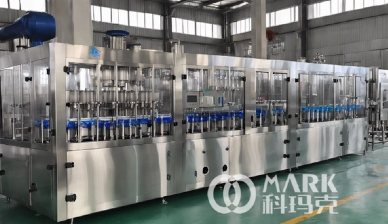
A high-quality water filling machine includes several advanced features:
Component | Function |
PLC Control System | Centralized control for real-time monitoring and automation. |
Touchscreen Interface | User-friendly operation with adjustable parameters. |
Stainless Steel Construction | Corrosion-resistant and easy to clean. |
Automatic Bottle Detection Sensors | Prevent filling when no bottle is present, avoiding spillage. |
High-Precision Filling Valves | Ensure consistent fill volume and speed. |
HEPA Filtration Systems | Maintain a sterile filling environment. |
Servo Motors | Provide accurate and energy-efficient control. |
These components ensure durability, accuracy, and compliance with hygiene standards such as ISO, CE, and GMP.
The adoption of modern water filling machines offers multiple benefits that extend far beyond speed and automation. These systems improve every aspect of bottled water production—enhancing product quality, operational safety, cost efficiency, and overall productivity.
Advanced precision filling technology ensures that every bottle is filled to an exact volume, regardless of size or shape. This consistency not only maintains brand reputation but also prevents consumer complaints related to underfilled or overfilled bottles.
Contactless filling mechanisms eliminate the risk of contamination from human contact. Stainless steel surfaces, HEPA filters, and automatic cleaning systems maintain sterile conditions throughout production, complying with food-grade safety standards.
Fully automated water filling machines can process thousands of bottles per hour, enabling continuous, high-speed production. This efficiency is crucial for meeting large-scale market demands while reducing production bottlenecks.
By minimizing water spillage, optimizing energy usage, and reducing maintenance downtime, modern systems deliver significant long-term savings.
Machines can easily switch between different bottle shapes, materials, and cap types, helping manufacturers quickly adapt to new packaging trends.
Intelligent PLC controls and automated sensors reduce reliance on manual labor, ensuring accuracy and consistency throughout the filling and sealing process.
Over the years, manufacturers have integrated smart and sustainable technologies to improve machine performance:
Servo technology ensures precise motion control, faster filling speeds, and adjustable flow rates.
Modern machines are equipped with sensors and IoT connectivity for real-time performance monitoring, predictive maintenance, and data analytics.
Energy-efficient motors and pneumatic systems help reduce power consumption, supporting sustainable manufacturing.
These self-cleaning systems use sterilized water and cleaning agents to automatically sanitize the machine without disassembly, saving time and resources.
Manufacturers can easily upgrade or reconfigure machine components to suit different production capacities or bottle designs.
Automated arms and conveyors work in tandem with filling machines to create fully integrated, high-speed bottling lines.
Sustainability has become a critical focus in the bottled water industry. Water filling machines contribute to eco-friendly production in several ways:
Accurate filling minimizes product loss and prevents overfilling, which wastes water and packaging materials.
Energy-efficient motors, smart sensors, and optimized processes reduce electricity use and carbon emissions.
Modern machines are designed to work with lightweight and recyclable PET bottles, supporting circular economy initiatives.
Advanced rinsing units recycle rinse water, reducing freshwater consumption during cleaning and production.
Water quality and safety are top priorities in bottled water production. Water filling machines are engineered to meet international safety and quality standards, including:
ISO 9001: Quality management system compliance.
CE Certification: European safety conformity.
GMP Standards: Good manufacturing practices for hygiene and sanitation.
Regular maintenance and calibration ensure machines maintain optimal performance and meet strict regulatory guidelines.
While primarily designed for bottled water, these machines are also suitable for other liquid products, such as:
Flavored beverages and juices
Carbonated drinks (with slight modifications)
Edible oils and milk
Pharmaceutical and cosmetic liquids
This versatility allows manufacturers to diversify their product lines without major equipment overhauls.
Selecting the right machine depends on several factors:
Criteria | Considerations |
Production Capacity | Choose a machine that meets your daily output targets. |
Bottle Type and Size | Ensure compatibility with PET, glass, or HDPE bottles. |
Automation Level | Match your budget and labor resources. |
Available Space | Monoblock designs save floor space. |
Hygiene Requirements | Look for stainless steel components and CIP systems. |
Supplier Reputation | Partner with trusted manufacturers for long-term reliability. |
Working with an experienced supplier ensures you receive professional installation, operator training, and after-sales service.
As global demand for bottled water continues to rise, innovation in water filling machinery will center on automation, data intelligence, and sustainability. Future systems will likely feature:
AI-driven predictive maintenance,
Cloud-based performance tracking,
Real-time energy optimization, and
Integration with renewable energy sources.
These advancements will help manufacturers achieve higher efficiency, lower environmental impact, and improved profitability.
In the modern beverage industry, the water filling machine is more than just a production tool—it is the cornerstone of quality, efficiency, and sustainability. From ensuring hygienic filling and precise volume control to reducing energy waste and supporting eco-friendly practices, these machines have revolutionized bottled water production worldwide.
Manufacturers looking to stay competitive must invest in advanced, reliable filling systems designed for scalability and long-term performance.
If your business is exploring efficient, high-quality water filling solutions, you can visit Zhangjiagang Comark Machinery Co., LTD. to learn more. The company offers a range of state-of-the-art water filling machines tailored for various production needs. Their technical expertise and commitment to quality make them a trusted partner in the beverage manufacturing industry.