
Views: 0 Author: Site Editor Publish Time: 2025-12-19 Origin: Site


In the competitive world of manufacturing and packaging, efficiency, accuracy, and consistency are paramount. One of the most critical steps in the packaging process is labeling—ensuring that bottles carry clear, professional, and accurate information. Automated bottle labeling machines have revolutionized this process by offering speed, precision, and reliability that manual labeling simply cannot match.
This article explores how automated bottle labeling machines improve packaging efficiency, the types of machines available, their benefits, operational considerations, and tips for selecting the right system for your production line.
An automated bottle labeling machine is a piece of industrial equipment designed to apply labels to bottles quickly and accurately with minimal human intervention. These machines are widely used in industries such as:
Beverage and dairy production
Pharmaceutical manufacturing
Cosmetics and personal care products
Chemical and household products
By automating the labeling process, companies can handle higher production volumes while reducing labor costs and minimizing errors.
Manual labeling can be time-consuming, inconsistent, and prone to mistakes. Even a small labeling error can result in regulatory non-compliance, wasted materials, or customer dissatisfaction. Automation addresses these challenges by:
Enhancing speed – Automated machines can label hundreds or thousands of bottles per hour.
Improving consistency – Labels are applied with precise alignment, reducing misprints or crooked placement.
Reducing labor costs – Less manual labor is needed, freeing workers for other tasks.
Minimizing waste – Accurate label placement ensures minimal label waste and avoids costly rework.
Ensuring compliance – Machines can handle barcodes, QR codes, and regulatory labeling requirements accurately.
By investing in automated labeling, businesses achieve higher productivity, lower operational costs, and improved brand image.
There are several types of automated labeling machines, each designed for specific applications and bottle shapes.
Best for cylindrical bottles such as water, soft drinks, or shampoos.
Labels wrap around the entire circumference of the bottle.
Can include pressure-sensitive, cold glue, or hot melt labeling options.
Apply labels to flat or rectangular bottles.
Often used in the pharmaceutical and cosmetic industries.
Ensures that the front and back labels are aligned precisely.
Apply labels to the top and bottom surfaces of a bottle.
Suitable for jars, cosmetics containers, or food packaging.
Use shrink sleeves to cover the entire bottle.
Allows for 360-degree graphics and tamper-evident sealing.
Common in beverage, dairy, and chemical industries.
Can apply multiple types of labels in one pass.
Ideal for high-volume production lines requiring front, back, and sleeve labels simultaneously.
Choosing the right type depends on bottle shape, label type, production speed, and industry requirements.
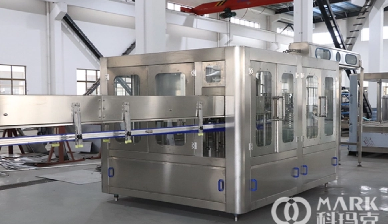
Understanding the key components helps in evaluating machine performance and maintenance needs:
Component | Function |
Conveyor System | Moves bottles steadily through the labeling station. |
Label Applicator | Mechanically applies labels onto the bottle surface. |
Sensor System | Detects bottle presence, orientation, and ensures accurate placement. |
Control Panel | Allows operators to set speed, label position, and monitor performance. |
Drive Motor | Powers the conveyor and labeling mechanism. |
Rewind System | Manages label rolls, ensuring smooth feeding and tension control. |
Advanced machines may include vision systems to verify label placement and quality in real-time, further enhancing efficiency.
Automated bottle labeling machines play a pivotal role in enhancing packaging efficiency across industries. By replacing manual labeling processes, these machines deliver speed, accuracy, and reliability, significantly improving overall production performance.
High-speed labeling machines are capable of processing hundreds to thousands of bottles per minute, far exceeding the capabilities of manual labor. This rapid operation reduces production bottlenecks and allows manufacturers to meet increasing market demand without the need to hire additional staff or expand labor-intensive processes. For high-volume beverage, cosmetic, or pharmaceutical lines, this speed ensures that delivery deadlines are consistently met.
Automated systems employ sensors, cameras, and precise applicators to ensure that each label is applied uniformly and correctly. This eliminates common manual errors, such as misaligned, crooked, or duplicate labels, which can lead to product rejections, regulatory issues, or customer complaints. By maintaining consistent label placement, manufacturers protect brand integrity and enhance product appeal on retail shelves.
Modern labeling machines are designed to handle a wide range of bottle shapes, sizes, and label materials, including pressure-sensitive, shrink sleeves, or wet-glue labels. Quick-change features allow operators to switch between products with minimal downtime, making production lines highly adaptable to seasonal promotions or diverse product ranges.
Precise label placement reduces waste by minimizing misapplied or damaged labels. This not only lowers material costs but also decreases environmental impact, supporting sustainable packaging practices.
By automating repetitive labeling tasks, manufacturers can redeploy staff to higher-value activities such as quality control, logistics, or machine oversight. This optimizes workforce utilization and reduces overall labor costs.
Automated labeling machines can be integrated with fillers, cappers, and packers, creating fully synchronized production lines. This integration reduces downtime, streamlines workflow, and ensures maximum operational efficiency across the entire packaging process.
Ensures compliance with labeling regulations, including nutritional information and barcodes.
Handles high-speed bottling lines with thousands of bottles per hour.
Supports sleeve labeling for unique branding.
Applies precise labels with batch numbers, expiration dates, and QR codes.
Reduces risk of regulatory violations.
Supports cleanroom-friendly designs with easy sanitation.
Provides consistent placement on jars, bottles, and tubes.
Supports high-quality graphics on sleeves and wraps.
Allows for quick format changes for seasonal or promotional packaging.
Ensures safety warnings and instructions are visible and compliant.
Durable machines handle viscous, abrasive, or sticky label materials.
Across industries, automated labeling machines enhance operational efficiency, ensure regulatory compliance, and improve customer satisfaction.
Selecting a suitable labeling machine requires considering several factors:
High-speed machines are essential for large-scale operations.
For smaller batches, semi-automatic machines may suffice.
Cylindrical, oval, rectangular, or irregular shapes each require specific applicators.
Material compatibility ensures the adhesive bonds properly and labels remain durable.
Pressure-sensitive, shrink sleeve, wet glue, or hot melt labels each require different application methods.
Consider label material, finish, and size.
Fully automatic machines offer maximum efficiency.
Semi-automatic models can be suitable for smaller operations or variable product lines.
Ensure the machine is compatible with upstream fillers and downstream packers.
Seamless integration minimizes production interruptions.
Choose machines with easy access to components for cleaning and servicing.
Reliable after-sales support ensures minimal downtime.
While automated labeling machines offer significant benefits, operators should be aware of potential challenges:
Cause: Incorrect sensor calibration or improper bottle spacing.
Solution: Adjust sensors and ensure consistent bottle placement on the conveyor.
Cause: Humidity, temperature, or incompatible surfaces.
Solution: Choose appropriate adhesive and maintain proper environmental conditions.
Cause: Switching between different bottle sizes or labels.
Solution: Use quick-change mechanisms and pre-programmed settings.
Cause: Incorrect tension or feeding speed.
Solution: Regularly inspect the label roll and feeding system to ensure smooth operation.
With proper setup, training, and maintenance, these challenges can be minimized, ensuring continuous and efficient production.
Regular maintenance enhances machine performance and lifespan:
Clean sensors and applicators regularly to prevent debris buildup.
Lubricate moving parts according to manufacturer guidelines.
Inspect conveyor belts for wear and alignment issues.
Check electrical connections for signs of corrosion or loose wiring.
Replace worn rollers or belts promptly to prevent machine stoppage.
Following a preventive maintenance schedule reduces downtime, increases efficiency, and protects your investment.
The future of automated labeling is driven by digitalization, AI, and smart manufacturing technologies:
Vision-based inspection systems automatically detect misaligned or missing labels.
Robotics integration allows dynamic handling of complex bottle shapes.
IoT connectivity enables remote monitoring, predictive maintenance, and performance analytics.
Sustainable labeling focuses on recyclable adhesives and environmentally friendly materials.
These trends are helping manufacturers increase productivity while meeting sustainability goals and regulatory requirements.
Automated bottle labeling machines have become indispensable in modern packaging operations. By combining speed, accuracy, and flexibility, they enable manufacturers to meet production demands, reduce labor costs, and improve product quality.
Investing in the right automated labeling system allows companies to streamline production lines, minimize waste, and maintain regulatory compliance. From beverages and cosmetics to pharmaceuticals and household chemicals, these machines play a critical role in ensuring efficiency, consistency, and customer satisfaction.